
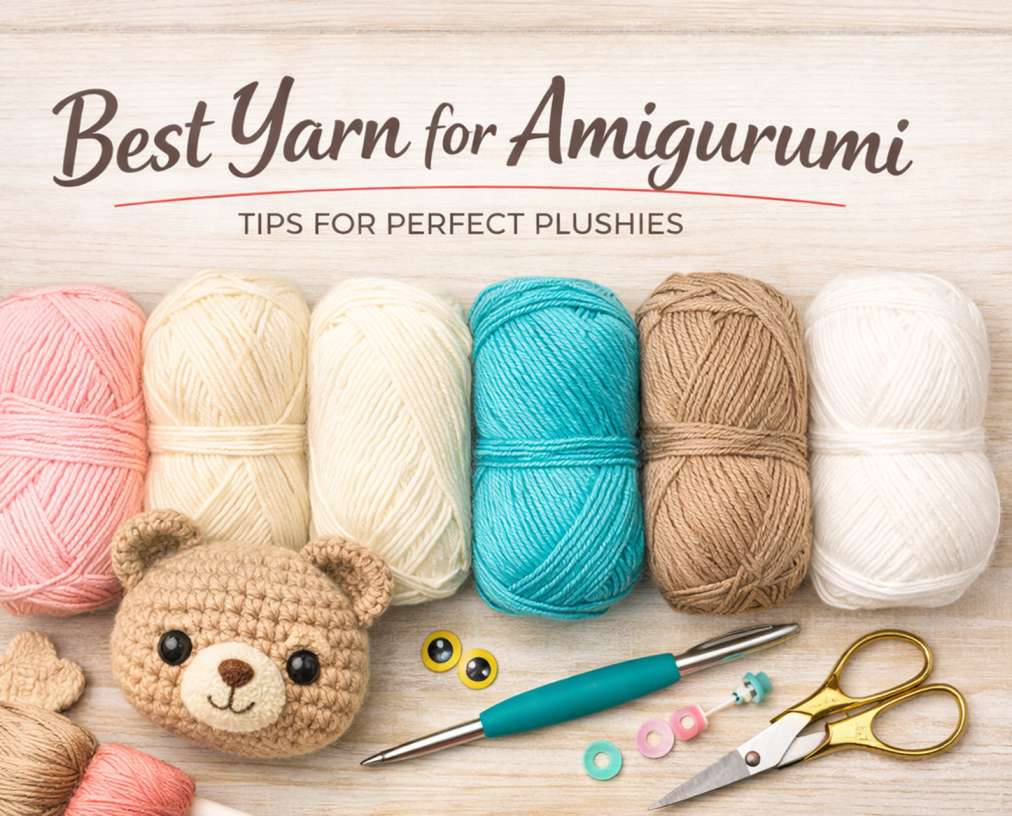
Best Yarn for Amigurumi (How to Choose the Perfect Yarn for Cute, Clean, Long-Lasting Plushies)
Amigurumi is basically “crochet + sculpture.” Your yarn choice decides whether your stitches look crisp, whether the toy holds its shape, and whether it turns into a fuzzy lint-ball after a few cuddles.
If you want the simplest answer: smooth cotton (especially mercerized cotton) is the safest “best yarn” for most amigurumi because it gives clean stitch definition, resists fuzz/pilling, and keeps details sharp. Acrylic can also work great, especially for beginners and budget projects—you just need to pick the right kind.
Why Yarn Choice Matters for Amigurumi
Amigurumi uses tight stitches and firm stuffing. The wrong yarn can:
- Split constantly (frustrating and slow)
- Fuzz/pill and hide your stitch lines
- Stretch out and make the toy look “tired”
- Lose shape after washing or play
The right yarn makes your amigurumi look neat, detailed, and professional—even if you’re a beginner.
The Best Yarn for Amigurumi Overall: Cotton
Cotton yarn is widely loved for amigurumi because it’s:
- Strong and durable
- Low-fuzz and often low-pilling
- Great for crisp stitch definition (your stitches look sharp and “clean”)
- Often washable (always check the label)
Why Mercerized Cotton Is Even Better for Amigurumi
Mercerized cotton is cotton that’s treated to be smoother and stronger. In real crochet terms, that means:
- Cleaner stitch definition
- Less fuzz (details stay visible)
- Better color depth
- Often less splitting while you crochet
If you’re aiming for that “store-quality” look with clean faces, sharp color changes, and tidy shaping, mercerized cotton is a top choice.
Best For
- Detailed amigurumi (faces, tiny parts, embroidery)
- Toys that need to look clean and polished
- Amigurumi you’ll photograph for Pinterest or product listings
Small Downside
Cotton has less stretch than acrylic, so it can feel a bit tougher on your hands during long crochet sessions. If that bothers you, try a cotton-acrylic blend.
Acrylic Yarn for Amigurumi (Budget-Friendly and Beginner-Friendly)
Acrylic is popular because it’s:
- Affordable and easy to find anywhere
- Soft and cozy for plushies
- Often washable
- Slightly stretchy (some people find it easier on the hands)
When Acrylic Isn’t Ideal
Some acrylic yarns can get fuzzy or pill after play and washing, which can blur stitch definition over time. If you want a cleaner finish with acrylic, choose a smoother acrylic (not fluffy or “hairy” styles).
Best For
- Bigger plushies
- Practice projects
- Gifts for older kids
- Bright, fun color palettes on a budget
Cotton-Acrylic Blends (The Middle Ground)
If pure cotton feels too stiff but you want something cleaner than many acrylics, a cotton-acrylic blend can be perfect:
- Softer than many 100% cottons
- Often less fuzzy than many acrylics
- Holds shape well while staying cuddly
Best For
- Soft toys that still need decent stitch definition
- Crochet sessions where pure cotton feels too hard on the hands
Best Yarn Weight for Amigurumi
Yarn weight changes the final size, the “look,” and how detailed the toy feels.
Most Common: DK and Worsted
- DK (light #3) often gives a neater, smaller stitch look—great for details.
- Worsted (medium #4) is beginner-friendly, easy to handle, and works up faster.
Quick Rule
- Want bigger plushies faster? Use thicker yarn.
- Want cleaner detail and cuter proportions? Use DK or lighter.
Best Yarn Texture for Amigurumi (Smooth vs Plush)
Smooth Yarn (Best for Clean Stitches)
Smooth yarn is ideal when you want:
- Visible stitch lines (that clean amigurumi look)
- Clean color changes
- Sharp facial embroidery
- Neat shaping
Cotton and smooth acrylic fit here.
Plush/Chenille/Velvet Yarn (Best for “Cute and Fluffy”)
Plush yarn can look adorable and trendy, but it can be harder because:
- You can’t see stitches easily (tough for beginners)
- Mistakes are harder to fix (frogging can be annoying)
- You need tight tension to avoid holes showing stuffing
Best for simple shapes like bears, bunnies, blobs, and round plushies.
How to Choose the Best Yarn for Your Amigurumi
Use this quick checklist:
1) Stitch Definition
If you want a professional, clean finish, pick yarn that shows stitches clearly (cotton is excellent for this).
2) Low Fuzz / Low Pilling
Fuzz hides details. If your toy has a face, embroidery, or lots of shaping, avoid yarns that get “hairy.”
3) Color Range
Amigurumi often needs multiple shades. Choose a yarn line with enough colors for skin tones, accents, and matching palettes.
4) Washability
If it’s for kids, choose yarn that can handle washing. Always check the label.
5) Comfort While Crocheting
If cotton hurts your hands, try a blend or a softer cotton line. Comfort matters if you’re making multiple toys.
Quick Recommendations by Project Type
For the Cleanest, Most Professional Amigurumi
Choose mercerized cotton or another smooth cotton yarn.
For Beginners on a Budget
Choose a smooth acrylic yarn that doesn’t fuzz too much.
For Soft, Cuddly Toys That Still Hold Shape
Choose a cotton-acrylic blend.
For Viral “Fluffy Plush” Amigurumi
Use chenille/velvet yarn, but stick to simple patterns and keep tension tight.
Common Yarn Mistakes in Amigurumi (And How to Avoid Them)
- Using fuzzy yarn for detailed patterns → details disappear fast.
- Picking yarn that splits constantly → stitches look messy and it slows you down.
- Choosing stretchy yarn + loose tension → stuffing shows through.
- Not adjusting hook size → amigurumi usually needs a smaller hook than the label suggests to create tight fabric.
FAQ: Best Yarn for Amigurumi
Is cotton or acrylic better for amigurumi?
Cotton is usually better for clean stitch definition and a polished look. Acrylic is cheaper, softer, and beginner-friendly. If you want a neat, detailed finish, cotton is often the best choice.
What is mercerized cotton yarn, and why is it good for amigurumi?
Mercerized cotton is smoother and stronger than regular cotton. It tends to split less, shows stitches clearly, and stays clean-looking—perfect for detailed amigurumi.
What yarn weight is best for amigurumi?
DK (#3) and worsted (#4) are most common. DK is great for smaller, cleaner details. Worsted is easier to handle and works up faster.
Can I use chenille or velvet yarn for amigurumi?
Yes, especially for simple plush toys. But it’s harder to see stitches and harder to undo mistakes, so it’s not the easiest option for beginners.
What yarn is best for small, detailed amigurumi?
A smooth, finer yarn (often DK cotton or mercerized cotton) paired with a smaller hook gives the cleanest detail and tight stitches.